how to write a research paper

How to Write a Research Paper: A Complete Step-by-Step Guide for Students (2025)

Writing a research paper is one of the most important academic skills that every student must learn. Whether you are in school, college, or university, at some point you will be asked to submit a research paper. Many students feel confused and stressed when they hear about research writing. They search online for how to write a research paper, how to write an introduction for a research paper, or even type write my research paper in panic.

If you are one of those students, don’t worry. This detailed guide will explain everything in simple, clear, and easy language. By the end of this blog, you will fully understand the process of writing a research paper step by step, from choosing a topic to writing the final conclusion.

What Is a Research Paper?

A research paper is an academic writing task that presents your ideas, findings, arguments, and analysis based on proper research. It is not just copying information from the internet. Instead, it shows:

  • Your understanding of a topic
  • Your ability to analyze information
  • Your skill in organizing ideas
  • Your power to support arguments with evidence

A research paper uses facts, data, studies, and credible sources to prove a point or answer a question.

Why Learning How to Write a Research Paper Is So Important

Learning how to write a research paper is important because:

  • It improves your thinking skills
  • It teaches you how to investigate deeply
  • It strengthens your writing ability
  • It helps you perform better academically
  • It prepares you for professional and scientific work

Many careers such as medicine, education, business, psychology, and engineering require strong research skills. So, learning this early gives you a big advantage.

Step 1: Choosing the Right Research Topic

The first and most important step in learning how to write a research paper is choosing the right topic. Your topic decides how easy or difficult your paper will be.

A good research topic should be:

  • Interesting to you
  • Easy to understand
  • Specific, not too broad
  • Supported by enough information
  • Related to your subject

Too broad topic: “Education System”
Better topic: “Impact of Online Learning on College Students”

Too broad topic: “Health Issues”
Better topic: “Effects of Fast Food on Teen Obesity”

A strong topic makes your research paper stronger.

Step 2: Conducting Proper Research

Once your topic is selected, the next step is collecting information. This stage builds the foundation of your paper.

You should gather information from:

  • Books
  • Academic journals
  • Research articles
  • Government websites
  • University databases
  • Trusted educational websites

Avoid copying from random blogs. Always use reliable sources. While researching, take notes and save important links for citation.

Step 3: Understand the Structure of a Research Paper

Before you learn how to write an abstract for a research paper or how to write an introduction for a research paper, it is important to understand the full structure.

A standard research paper includes:

  • Title Page
  • Abstract
  • Introduction
  • Literature Review
  • Methodology
  • Results
  • Discussion
  • Conclusion
  • References

Each of these sections serves a unique purpose.

How to Write an Abstract for a Research Paper 

The abstract is the first section readers see, but it is usually written at the end. Many students search how to write an abstract for a research paper because this part feels confusing.

The abstract is a short summary of your entire research paper. It tells the reader:

  • What the study is about
  • Why the study was conducted
  • How the research was done
  • What results were found
  • What conclusion was reached

Your abstract should be:

  • Clear
  • Accurate
  • Short (150–250 words)
  • Written in simple language

Think of the abstract as a movie trailer—it gives a quick preview of the full story.

How to Write an Introduction for a Research Paper 

Many students struggle with how to write an introduction for a research paper. The introduction is the gateway to your research.

A strong introduction should:

  • Introduce the topic clearly
  • Provide background information
  • Explain why the topic is important
  • Mention the research problem
  • State the purpose of the study
  • End with a thesis statement

Your first sentence should grab attention. You can use a question, a surprising fact, or a strong statement to engage the reader.

A weak introduction can make your research paper look boring, even if your data is strong.

Writing the Literature Review Section

The literature review shows what other researchers have already studied about your topic. Here, you:

  • Discuss previous studies
  • Compare different viewpoints
  • Identify research gaps
  • Show how your research fits in

This section proves that you are not repeating old work and that your research has value.

Writing the Methodology Section

The methodology explains how you conducted your research. This part is technical but very important.

It includes:

  • Type of research (qualitative or quantitative)
  • Research design
  • Data collection methods
  • Sample size
  • Tools used
  • Data analysis method

This section builds trust in your results.

Writing the Results Section

In this section, you present:

  • Data
  • Charts
  • Graphs
  • Tables
  • Observations

You should only present facts here, not explanations. The explanation comes in the discussion section.

Writing the Discussion Section

The discussion connects everything together. Here you explain:

  • What your results mean
  • How they relate to past studies
  • Whether your hypothesis was supported
  • What your findings suggest

This section shows your ability to think deeply and critically.

How to Write a Conclusion for a Research Paper (Step-by-Step)

Students also search frequently for how to write a conclusion for a research paper. The conclusion is the final message of your study.

Your conclusion should:

  • Summarize the main findings
  • Restate the research purpose
  • Explain why the study is important
  • Give practical recommendations
  • Suggest future research

A weak conclusion can reduce the impact of a strong study. Your ending should be confident, clear, and powerful.

Writing the Reference List Properly

Every research paper must include proper references. This shows honesty and avoids plagiarism.

Common citation styles:

  • APA
  • MLA
  • Chicago
  • Harvard

Always follow the format given by your teacher or university.

Editing and Proofreading Your Research Paper

Never submit your first draft. Proofreading is essential to improve quality.

Check for:

  • Grammar errors
  • Spelling mistakes
  • Weak sentences
  • Repeated ideas
  • Incorrect citations

You can use grammar tools, but manual checking is also very important.

Common Problems Students Face in Research Writing

Many students feel lost and type write my research paper into search engines because of:

  • Poor topic selectionf
  • Weak English skills
  • Fear of plagiarism
  • Time pressure
  • Multiple assignments
  • Lack of confidence

These problems are common, but they can be solved with proper guidance and planning.

Is Affordable Research Paper Writing a Good Choice?

Some students also look for affordable research paper writing when deadlines are close. These services can help with:

  • Research support
  • Structuring the paper
  • Editing and proofreading
  • Citation formatting

However, students should always use such services for learning and guidance—not for copying. Your goal should be skill development.

How to Manage Time While Writing a Research Paper

Time management is key to success. Follow these tips:

  • Start early
  • Divide tasks into small parts
  • Set weekly goals
  • Avoid multitasking
  • Take short breaks

Good planning reduces stress and improves quality.

Difference Between a Research Paper and an Essay

Many students confuse essays with research papers.

A research paper:

  • Uses deep research
  • Includes data and evidence
  • Follows strict formatting
  • Is longer and more detailed

An essay:

  • Focuses on opinions
  • Needs limited research
  • Has more flexible formatting

Understanding this difference helps you perform better in exams and assignments.

How Technology Makes Research Writing Easier

Today, students can use:

  • Online research databases
  • Plagiarism checkers
  • Citation generators
  • Grammar tools
  • AI writing assistants

These tools make learning how to write a research paper easier than before.

Final Checklist Before Submitting Your Paper

Before submitting your research paper, make sure:

  • Title page is formatted correctly
  • Abstract is included
  • Introduction is strong
  • Conclusion is clear
  • References are accurate
  • Font size and spacing are correct

This final check improves your marks and presentation.

Final Thoughts

Learning how to write a research paper is not as difficult as it seems. When you follow a clear step-by-step method, the whole process becomes simple and manageable.

Always remember:

  • Learn how to write an abstract for a research paper properly
  • Master how to write an introduction for a research paper
  • Understand how to write a conclusion for a research paper
  • Use help wisely if you ever search write my research paper
  • Choose only ethical and affordable research paper writing services

With practice and patience, you can become confident in research writing and achieve excellent academic results.

Frequently Asked Questions (FAQs) 

  1. What is the easiest way to learn how to write a research paper?

The easiest way to learn how to write a research paper is to follow a clear step-by-step process. Start by choosing a good topic, doing proper research, creating an outline, and then writing each section one by one. Begin with the body, then write the abstract, introduction, and conclusion at the end. Practice regularly, and your confidence will grow.

  1. How long does it usually take to write a research paper?

The time required depends on the length and difficulty of the topic. A short research paper may take 3–5 days, while a long paper can take 2–3 weeks. Good research, proper planning, and daily writing targets help complete the paper faster and with less stress.

  1. How to write an abstract for a research paper in simple words?

To write an abstract for a research paper, briefly explain:

  • What your research is about
  • Why you did the study
  • How you conducted the research
  • What major results you found
  • What conclusion you reached

Keep it short (150–250 words) and write it after finishing your full paper.

  1. How to write an introduction for a research paper if I am a beginner?

If you are a beginner, start your introduction by explaining the topic in simple words. Then describe why the topic is important, what problem you are studying, and what your research aims to achieve. End your introduction with a clear thesis statement.

  1. How to write a conclusion for a research paper correctly?

To write a conclusion for a research paper, summarize the main points, restate the purpose of your study, explain the importance of your findings, and give suggestions for future research. Do not add new information in the conclusion.

  1. Can I use AI tools to help write my research paper?

Yes, AI tools can be used for brainstorming ideas, improving grammar, and understanding structure. However, you should never copy AI-generated content directly for submission. Your research paper must always be original and properly cited.

  1. Why do students search “write my research paper” online?

Students usually search “write my research paper” when they feel overwhelmed by deadlines, difficult topics, weak English skills, or heavy academic pressure. This feeling is normal, but learning the writing process step by step helps reduce stress and builds confidence.

  1. Is affordable research paper writing safe to use?

Affordable research paper writing services can be helpful for editing, formatting, and guidance if used ethically. Students should never submit purchased content as their own. These services should be used only for learning support and improvement.

  1. What are the most common mistakes in research paper writing?

Common mistakes include:

  • Choosing a weak topic
  • Poor research
  • Plagiarism
  • Weak introduction and conclusion
  • Incorrect citations
  • Poor grammar
    Avoiding these mistakes greatly improves your final grade.
  1. What is the best format for a research paper?

The most commonly used format is APA. However, some universities require MLA, Chicago, or Harvard style. Always follow the formatting style given by your teacher or institution.
How to Create an APA Outline Format for Your Research Paper (Step-by-Step Guide)

Writing a research paper can be a challenge, especially when it comes to structuring ideas clearly. The APA outline format helps you organize your thoughts, keep your writing logical, and follow professional academic standards.

In this comprehensive guide, you’ll learn how to create an APA outline format for your research paper in easy, step-by-step instructions. Whether you’re writing a psychology, education, or science paper, this tutorial will help you master the outline format for research paper APA style — making your writing process smoother and more efficient.


What Is an APA Outline Format?

The APA outline format is a framework recommended by the American Psychological Association (APA) to help students structure their research papers logically. It shows how main ideas, supporting points, and examples fit together to form a coherent paper.

Main Features of the APA Outline

  • Roman numerals (I, II, III) – for main sections
  • Capital letters (A, B, C) – for subsections
  • Arabic numerals (1, 2, 3) – for supporting details
  • Lowercase letters (a, b, c) – for finer points

This logical hierarchy helps your readers easily follow your arguments.


Why You Need an APA Outline for Your Research Paper

An outline helps turn disorganized notes into a clear, focused structure. Here’s why it’s important:

  1. Keeps You Organized: Helps you see how each section connects to your thesis.
  2. Saves Time: Writing becomes easier when your ideas are mapped out.
  3. Ensures Logical Flow: Readers can easily follow your argument.
  4. Meets APA Standards: Helps you adhere to official academic formatting.
  5. Improves Collaboration: Makes it easier to divide work in group projects.

If you find structuring your paper overwhelming, you can always look for expert assistance by searching write my essay or write my essay online for professional help.


Structure of an APA Outline

APA outlines typically include five levels of organization, depending on how detailed your research is.

Level Symbol Type Example Description
1 Roman Numerals I. Introduction Major sections
2 Capital Letters A. Background Subsections
3 Arabic Numbers 1. Problem Definition Supporting points
4 Lowercase Letters a. Data Evidence Additional details
5 Parenthetical Numbers (1) Statistical Data Optional deep details


Basic APA Formatting Rules

Before you start writing your outline, make sure you follow the general formatting standards of APA:

  • Font: Times New Roman, 12 pt
  • Spacing: Double-spaced
  • Margins: 1 inch on all sides
  • Alignment: Left-aligned text
  • Indentation: 0.5 inches for each level

These rules keep your document professional and easy to read.


Step-by-Step Guide: How to Create an APA Outline Format for Research Paper

Let’s break down the entire process into simple, practical steps.


Step 1: Choose a Focused Research Topic

Pick a topic that’s specific and researchable.
Example:
Too broad: Climate Change
Focused: The Impact of Climate Change on Coastal Ecosystems


Step 2: Create a Strong Thesis Statement

Your thesis gives direction to your outline.
Example:
“Climate change significantly affects coastal ecosystems through rising sea levels, coral bleaching, and habitat loss.”


Step 3: Divide the Paper into Main Sections

Common main sections in most research papers include:

  1. Introduction
  2. Literature Review
  3. Methodology
  4. Results and Discussion
  5. Conclusion


Step 4: Add Subheadings and Supporting Details

Use subheadings and bullet points to expand each major section.

Example:

  1. Introduction
     A. Background of the Study
     B. Purpose and Significance
     C. Thesis Statement
  2. Literature Review
     A. Previous Studies
     B. Gaps in the Research
     C. Theoretical Framework

III. Methodology
 A. Research Design
 B. Data Collection
 C. Data Analysis

  1. Results and Discussion
     A. Major Findings
     B. Interpretation of Data
     C. Policy Implications
  2. Conclusion
     A. Summary of Results
     B. Limitations
     C. Recommendations


Step 5: Keep Numbering and Indentation Consistent

APA outlines must follow a clear pattern.

Example:

  1. Introduction
     A. Overview
      1. Importance of Topic
      2. Research Background
     B. Thesis Statement

Each indentation shows how points are related.


Step 6: Apply APA Heading Levels Correctly

When converting your outline to a research paper, your headings should follow the APA 7th edition heading structure:

  1. Level 1: Centered, Bold, Title Case
  2. Level 2: Left-Aligned, Bold, Title Case
  3. Level 3: Left-Aligned, Bold Italic, Title Case
  4. Level 4: Indented, Bold, Title Case, Period
  5. Level 5: Indented, Bold Italic, Title Case, Period


Step 7: Include Citations (If Necessary)

You can add brief citations in your outline for reference tracking.
Example:
III. Methodology
 A. Qualitative Design (Johnson, 2023)
 B. Interview Data (Smith & Lee, 2022)


Step 8: Review and Revise

Read your outline carefully and ensure that:

  • Ideas flow logically.
  • Each subpoint connects to the thesis.
  • Indentation and numbering are consistent.

If it’s too time-consuming, use expert help by searching write my essay or write my essay online to get your outline polished professionally.


Sample of a Full APA Outline

Here’s a complete example:


Title: The Impact of Climate Change on Coastal Ecosystems

  1. Introduction
     A. Background of the Study
      1. Overview of Global Warming
      2. Effects on Marine Life
     B. Significance of Research
     C. Thesis Statement
  2. Literature Review
     A. Previous Research Findings
     B. Environmental Challenges
      1. Sea Level Rise
      2. Coral Bleaching
      3. Ocean Acidification
     C. Gaps in the Literature

III. Methodology
 A. Research Design
 B. Sampling and Data Collection
 C. Analytical Framework

  1. Results and Discussion
     A. Observations and Patterns
     B. Comparison with Prior Studies
     C. Implications for Policy and Practice

Conclusion
 A. Summary of Key Findings
 B. Study Limitations
 C. Suggestions for Future Research


Expert Tips to Make Your APA Outline More Effective

  1. Be concise: Avoid lengthy sentences; focus on keywords.
  2. Use parallel wording: Maintain consistency across points.
  3. Keep hierarchy logical: Move from general to specific ideas.
  4. Stay flexible: Revise as you gather more research.
  5. Seek guidance: Professional writers who specialize in write my essay services can help refine your structure.

Common Mistakes to Avoid

  • Mixing APA with MLA or Chicago formatting.
  • Adding too many unnecessary details.
  • Forgetting your thesis focus.
  • Using inconsistent indentation or numbering.
  • Skipping revision.

Avoiding these mistakes will make your outline more professional and organized.


Key Benefits of Using an APA Outline

  • Keeps research structured and focused.
  • Simplifies writing and editing.
  • Enhances readability and professionalism.
  • Reduces writing stress and confusion.
  • Ensures alignment with APA academic standards.

A good outline format for research paper APA is the secret to an effective and high-quality final draft.


Final Thoughts

Learning how to create an APA outline format for your research paper helps you plan, organize, and write more effectively. It ensures that your ideas flow smoothly, and your work meets APA guidelines.

If the formatting process feels challenging, don’t worry — professional services exist to assist students like you. You can easily find support by searching write my essay or write my essay online, where experts can format your paper and outline perfectly.

A strong outline is more than preparation — it’s the foundation for an outstanding research paper.


Frequently Asked Questions (FAQs)

  1. What is an APA format outline used for?

An APA outline is used to organize your research paper logically and ensure that it follows the official guidelines of the American Psychological Association. It helps create a clear flow of ideas before writing the full draft.

  1. How do you structure an APA outline?

You start with Roman numerals for main sections, capital letters for subheadings, numbers for details, and lowercase letters for supporting points — each level indented properly.

  1. Is an outline mandatory for all APA research papers?

Not always, but most professors recommend it because it improves organization and clarity, especially for longer or more complex papers.

  1. Can I include citations in my outline?

Yes! You can include brief in-text citations to remind yourself which sources support which points. This helps during the writing process.

  1. How long should an APA outline be?

There’s no strict limit. The length depends on the depth of your paper. For short papers, 1–2 pages may be enough; for thesis-level research, 4–6 pages of outline may be required.

  1. Can someone help me write an APA outline?

Absolutely. Many academic writing platforms allow you to request help by simply saying write my research paper or write my research paper online — and professionals can create a perfectly formatted APA outline for you.

  1. Where can I get help creating an APA-style outline for my research paper?

If you ever need help creating an APA-style outline or formatting your research paper, you can always get assistance from Affordable Writing — they specialize in academic and research writing support.

Concept Paper Writing: Top 10 Tips for Scoring Higher Grades in Assignments

When students are given academic tasks, one of the most important forms of writing they encounter is the concept paper. It serves as the foundation of many academic projects, research proposals, and even professional reports. Despite its significance, many students struggle with writing it in a clear, structured, and convincing manner. If you are among those who feel overwhelmed by this task, do not worry, you are not alone.

This blog provides a detailed and comprehensive guide on concept paper writing, highlighting ten powerful tips to help you score higher grades in your assignments. Whether you are a high school student, a university undergraduate, or a graduate student, these tips will help you build confidence and improve your writing skills. Along the way, we will also explore why concept papers matter, what they include, and how you can align them with academic standards.

What is a Concept Paper?

A concept paper is a short, written document that presents an idea, project, or plan. Its main goal is to convince the reader, often a teacher, supervisor, or funding body that the proposed idea is worth pursuing. It does not provide detailed results or final findings but instead outlines the purpose, importance, and framework of a project or research.

For example, when preparing for a thesis, research paper, or capstone project, students are often asked to first submit a concept paper. This allows the evaluator to understand the direction of the research and give feedback before the student invests time and effort into full-scale writing.

In simple terms, think of it as the “blueprint” of your research or academic assignment. Without a well-prepared concept paper, your project may lack direction, clarity, and focus.

Importance of Concept Paper Writing

Writing a concept paper is not just an educational formality it has deeper importance. Some key factors include:

  1. Clarifies ideas: It allows you to establish your thoughts before moving into detailed writing.
  2. Provides focus: A strong concept paper keeps you on path, avoiding needless diversions.
  3. Saves time: By preparing a clear outline, you reduce the chances of rewriting or changing directions later.
  4. Convinces others: In many cases, the grades of your project depends on how well you present your initial ideas.
  5. Academic requirement: Most universities require it as part of their assignment or research paper process. 

Top 10 Tips for Writing a High-Scoring Concept Paper

Now that we know why concept papers matter, let us dive into the ten best tips that will help you master this skill and secure higher grades in your assignments.

  1. Understand the Assignment Requirements

The first step is to carefully read and analyze the instructions given by your teacher or institution. Every concept paper must meet specific guidelines such as word count, format, referencing style, and structure. Missing these details can affect your grades, even if your content is strong.
  • Always check whether the paper requires APA, MLA, or another style.
  • Confirm the required sections (title, introduction, objectives, methodology, etc.).
  • Ask for clarification if something is unclear.

By starting with a clear understanding of the assignment, you avoid mistakes that cost marks.

  1. Choose a Focused and Relevant Topic

Your topic is the heart of your concept paper. Avoid choosing a subject that is too broad or too vague. Instead, select something that is specific, researchable, and relevant to your field of study.

For instance:

  • Instead of writing on “Global Warming,” focus on “The Impact of Plastic Pollution on Marine Life.”
  • Instead of “Social Media,” choose “The Role of Instagram in Shaping Teenagers’ Body Image.”

A focused topic makes your paper easier to write, clearer to understand, and stronger in impact.

  1. Craft a Clear and Concise Title

Your title is the first thing the reader sees. It should summarize your concept paper in one line and create interest. A weak or vague title may cause the evaluator to lose focus before even reading the content.

Good titles are:

  • Specific: “Digital Literacy and Academic Performance of University Students”
  • Informative: “Exploring the Benefits of Organic Farming in Rural Communities”
  • Concise: Not too long or wordy

A well-written title reflects clarity and professionalism.

  1. Write a Strong Introduction

The introduction is where you hook the reader. It should briefly explain:

  • The background of your topic
  • Why the issue is important
  • What you plan to achieve with your paper

For example:

“In recent years, the increasing use of social media platforms has reshaped communication patterns among youth. However, its effects on students’ academic performance remain a pressing concern. This concept paper seeks to explore the relationship between social media use and study habits among college students.”

Notice how the introduction sets the tone, provides context, and states the aim clearly.

  1. Define Clear Objectives

Every concept paper should include well-defined objectives. Objectives are the goals you hope to achieve through your study or project. They guide your research and make your work measurable.

Good objectives are:

  • Specific (clearly state what you want to find out)
  • Realistic (achievable within your time and resources)
  • Measurable (can be evaluated later)

For instance:

  • To investigate the effects of online learning on students’ academic performance.
  • To examine the role of peer pressure in teenagers’ decision-making.

Objectives show your reader that you have a clear plan.

  1. Provide a Rationale

The rationale explains why your topic matters. In this section, highlight the significance of your concept paper:

  • What problem are you addressing?
  • Why is this problem important?
  • Who will benefit from your study?

Example:

“The rapid growth of online education has created both opportunities and challenges. While flexible learning methods are appreciated, concerns about declining student motivation persist. This concept paper intends to evaluate whether online learning truly enhances or reduces student engagement, offering insights for educators and policymakers.”

A strong rationale convinces your teacher or evaluator that your work has real value.

  1. Develop a Simple Methodology

Even though a concept paper is not a full research project, you should briefly mention how you plan to conduct your study. Methodology includes:

  • Research design (qualitative, quantitative, or mixed)
  • Data collection methods (survey, interview, experiment, literature review)
  • Population or sample (who will be studied)

This section assures the reader that your idea is practical and achievable.

  1. Stay Organized and Structured

Presentation matters. A poorly organized concept paper is difficult to follow, no matter how strong the content. Use clear headings and subheadings for each section. Avoid writing long, unbroken paragraphs.

A standard structure includes:

  1. Title
  2. Introduction
  3. Objectives
  4. Rationale
  5. Methodology
  6. Expected Outcomes
  7. References

Keeping your paper neat and logical creates a professional impression.

  1. Use Simple and Formal Language

Many students lose marks because they try to use complex jargon or overly casual expressions. The best concept paper is one that is easy to read yet formal enough to meet academic standards.

  • Avoid slang and unnecessary complicated terms.
  • Write in complete sentences with proper grammar.
  • Be direct—say what you mean without unnecessary words.

For example, instead of writing:
“Due to the fact that students are not able to concentrate all the time, their academic grades kind of get affected in a lot of ways.”

You can write:
“Students often face difficulties in maintaining concentration, which negatively affects their academic performance.”

Clear writing shows clarity of thought.

  1. Revise, Proofread, and Cite Properly

The final step is editing and proofreading. Even the strongest concept paper can lose marks if it contains grammar mistakes, spelling errors, or poor formatting.

  • Check grammar, punctuation, and spelling.
  • Ensure your referencing style (APA, MLA, Chicago) is consistent.
  • Ask a friend or mentor to review your paper.
  • Avoid plagiarism by properly citing all sources.

If you think that this procedure is difficult than you always look for “help for writing a research paperfrom authentic and best writing centers. Getting help from the professionals can polish your work and your work seems to be professional.

Common Mistakes to Avoid

To make your work even stronger, steer clear of these common errors students often make in concept paper writing:

  1. Vagueness: Writing assignment without clear focus or objectives.
  2. Over complication: Using unnecessary content.
  3. Weak rationale: Not explaining why the study matters.
  4. Ignoring guidelines: Forget to follow instructions given by the teacher.
  5. Poor proofreading: Submitting work while ignoring grammar mistake and wrong spelling.

By avoiding these mistakes, you increase your chances of success.

Conclusion

A concept paper looks like a small portion of your academic journey but it plays important role in defining the success of your assignment, research and project. It shows your ability to manage ideas, present them clearly, and prove other of their importance.


By following the top 10 tip discussed in this blog understanding requirements, selecting a focused topic, writing a solid introduction, explaining objectives, explaining methodology, staying organized, using formal English and rechecking carefully can increase the quality of your writing. 

Remember academic writing is a skill, and all the skills are improved with doing practice. If you are facing difficulties never feel hesitate and look for help for writing a research paper from reliable academic platform.

With loyalty and effort, you can master concept paper writing and can achieve higher grade whom which are you looking for.

write a hypothesis

How to Write a Hypothesis in Research Papers: Complete Student Guide

Writing a research paper is a core part of every student’s academic journey. From high school projects to university-level theses, research papers test a student’s ability to think critically, analyze data, and present ideas logically. One of the most essential parts of a research paper is the hypothesis.

The hypothesis acts as the foundation of your research—it guides the direction, shapes your arguments, and helps you reach meaningful conclusions. Yet, many students find it challenging to understand precisely how to write a hypothesis in research papers. Should it be a guess? Should it be a question? Or should it be a statement?

This guide provides a detailed answer to these questions and offers a step-by-step explanation of how to write a clear, testable, and strong hypothesis. By the end of this blog, you’ll not only understand the basics but also have practical tools to apply in your next assignment. And if you still feel unsure, you can always seek research paper writing help to polish your skills.

What is a Hypothesis?

Before learning how to write a hypothesis, you must first understand what it really means. A hypothesis is a tentative statement that predicts the relationship between two or more variables. It is not just a random guess—it is an educated assumption based on prior knowledge, observation, or research.

For example:

  • “Increased social media use leads to mental health issues among college students.”

Here, “social media” is the independent variable (the factor you change), and “mental health” is the dependent variable (the factor you measure).

In simple words, a hypothesis is like a compass that points your research in the right direction. Without it, your paper would lack focus and coherence.

Why is a Hypothesis Important in Research Papers?

Students often underestimate the importance of hypotheses. In reality, they serve multiple purposes:

  1. Provides direction – It gives your study a clear focus.
  2. Defines variables – It specifies what you are testing.
  3. Guides methodology – Helps decide whether to use experiments, surveys, or observations.
  4. Encourages critical thinking – Forces you to base assumptions on evidence rather than guesswork.
  5. Strengthens credibility – A well-written hypothesis demonstrates that you have a solid understanding of your topic.

This is why professors place such emphasis on hypotheses when reviewing research papers.

Different Types of Hypotheses

To understand how to write a hypothesis, you also need to know the types. Each type is used depending on the research design.

  1. Null Hypothesis (H₀)

  • States that there is no relationship between variables.
  • Example: “There is no difference in academic performance between students who take online classes and those who take physical classes.”
  1. Alternative Hypothesis (H₁ or Ha)

  • Suggests that there is a relationship.
  • Example: Students who take physical classes perform better than those who take online classes.”
  1. Directional Hypothesis

  • Predicts the exact nature of the relationship.
  • Example: “Increased social media use affects mental health.”
  1. Non-directional Hypothesis

  • Predicts a relationship but not its direction.
  • Example: “There is a relationship between social media and mental health.”
  1. Simple Hypothesis

  • Involves only two variables (one independent and one dependent).
  1. Complex Hypothesis

  • Involves two or more independent or dependent variables.

Knowing these types helps you choose the most appropriate one for your research.

Steps on How to Write a Hypothesis

Now let’s break down the process step by step.

Step 1: Identify Your Research Question

Every hypothesis begins with a research question. Ask yourself: “What am I trying to study or prove?”

Example: “Does morning walk improve memory among college students?”

Step 2: Conduct Background Research

You cannot build a hypothesis out of thin air. Read academic articles, books, and studies to understand what experts have already discovered. This prevents duplication and provides a foundation for your own statement.

Step 3: Identify Variables

  • Independent Variable (IV): The factor you control or change.
  • Dependent Variable (DV): The factor you measure.

In the above example, exercise is the IV, and memory performance is the DV.

Step 4: Formulate a Tentative Statement

Turn your research question into a testable statement.

  • Tentative: “Walking may improve memory.”
  • Refined: “Students who walk regularly have better memory than those who do not.”

Step 5: Make it Testable and Specific

Your hypothesis should be measurable. Avoid vague words like better or worse without defining how.

Instead of: “Music helps concentration.”

Write: “Students who listen to soft instrumental music while studying score higher in memory tests than those who study in silence.”

Step 6: Write in the Correct Format

A good rule is:

If [independent variable], then [dependent variable], because [reason].

Example: “If students sleep at least 8 hours daily, then their academic performance will improve because sleep enhances memory retention.”

This step is crucial to mastering the art of writing a hypothesis effectively.

Examples of Hypotheses in Different Fields

To clarify, let’s examine examples across various subjects.

Psychology

  • “People who practice meditation daily report lower stress levels than those who do not.”

Biology

  • “Plants exposed to more sunlight grow taller than plants kept in the shade.”

Education

  • “Using digital learning tools increases student engagement compared to traditional textbooks.”

Business

  • “Offering discounts increases customer loyalty for online stores.”

Health Sciences

  • “Patients who follow a balanced diet recover faster from illness than those with poor eating habits.”

These examples show that no matter your subject, the process of writing hypotheses remains the same.

Common Mistakes Students Make in Hypothesis Writing

Even when students know the basics, they often make errors. Here are some to avoid:

  1. Being too vague

    • Bad: “Exercise is good for students.”
    • Good: “Exercise improves test performance among college students.”
  2. Making untestable claims

    • Bad: “Love is the best feeling.” (cannot be measured scientifically)
  3. Confusing hypothesis with prediction

    • A prediction is a guess; a hypothesis is based on evidence.
  4. Ignoring variables

    • A proper hypothesis must include both IV and DV.

By avoiding these mistakes, you’ll strengthen your research paper.

The Role of Hypothesis in Research Methodology

Your hypothesis is not just a statement—it decides your entire research design.

  • If you hypothesize a relationship, you might use surveys or experiments.
  • If you hypothesize that there is no difference, you might use statistical tests.
  • If your hypothesis is directional, your analysis will focus on proving or disproving that direction.

In short, the hypothesis shapes your data collection, analysis, and conclusion.

How to Test a Hypothesis

Writing the hypothesis is only half the work; testing it is equally important.

Steps in Hypothesis Testing:

  1. State the null and alternative hypotheses.
  2. Choose a significance level (commonly 0.05).
  3. Collect data through experiments or surveys.
  4. Apply statistical tests (t-test, chi-square, regression, etc.).
  5. Compare results to see if the null hypothesis should be rejected.

Testing validates whether your hypothesis holds in real-world conditions.

Tips for Writing a Strong Hypothesis

  1. Be clear and concise – One or two sentences are enough.
  2. Keep it simple – Avoid jargon.
  3. Make it testable – Your hypothesis should be measurable and testable.
  4. Base it on prior knowledge – Don’t just guess.
  5. Align with your research objectives – It must answer your primary research question.

If you follow these tips, you’ll never struggle with how to write a hypothesis again.

When to Seek Research Papers Writing Help

Sometimes, despite knowing the theory, students face challenges like:

  • Lack of time due to multiple assignments.
  • Difficulty in structuring the paper.
  • Weak research or writing skills.
  • Struggling with statistics or methodology.

In such cases, seeking write my research paper services can save time and reduce stress. Professional writers handle the work efficiently while ensuring originality and quality

  • Well-structured papers.
  • Properly written hypotheses.
  • Correct citations and formatting.
  • Guidance for future assignments.

Using such support is not about avoiding hard work—it’s about learning the proper techniques from experts.

Checklist for Writing Hypotheses

Before finalizing, ask yourself:

  • Does my hypothesis answer a research question?
  • Are the variables clear?
  • Can it be tested scientifically?
  • Is it specific, measurable, and concise?
  • Does it align with my research goals?

If the answer is “yes” to all, you’ve written a strong hypothesis.p

Conclusion

Writing a hypothesis may seem difficult at first, but with practice, it becomes second nature. Always remember that a hypothesis is not just a guess—it is an educated, testable statement that directs your research.

In this blog, we discussed what a hypothesis is, its importance, its different types, and a step-by-step process for writing a hypothesis effectively. We also highlighted common mistakes, provided examples from various fields, and explained the process of hypothesis testing.

By applying these tips, you can strengthen your research papers, impress your professors, and boost your academic performance. And if you ever feel overwhelmed, don’t hesitate to seek help with research papers to guide you through.

Ultimately, the key to success lies in preparation, clarity, and critical thinking. Once you master hypothesis writing, you’ll find that research papers are not as intimidating as they first seem.

research topics for term paper

Top 15 Unique Research Topics for Term Paper Assignments

Writing a term paper is one of the most important parts of academic life. Almost every student, whether in high school, college, or university, faces the challenge of choosing a good topic. The difficulty usually lies not in writing the paper itself, but in deciding what to write about. A strong topic makes the work easier, interesting, and more valuable. That is why selecting research topics for term paper assignments is a step that should never be rushed.

In this blog, we will explore 15 unique research topics that can help students stand out. Along the way, we will also give some tips on how to pick the right subject, how to research effectively, and how to make the writing process smooth. If at any point you feel stuck, remember that help is always available, and many students often ask, Can someone write my research paper?” The answer is yes—support exists, but first, let us guide you toward some fresh ideas.

Why Choosing the Right Topic Matters?

A topic is like the foundation of a building. If it is weak, the whole structure becomes shaky. Similarly, if your term paper topic is too broad, too narrow, or uninteresting, you will struggle through the entire writing process. On the other hand, when you pick a unique, engaging, and researchable subject, everything else—from collecting sources to writing arguments—flows more easily.

Good research topics for term paper assignments share a few qualities:

  1. They are specific enough to allow detailed discussion.
  2. They are broad enough to find sufficient information.
  3. They are relevant to your course or field of study.
  4. They are original, meaning they are not overly repeated or outdated.
  5. They are interesting both for you and for your readers.

Top 15 Unique Research Topics for Term Paper Assignments

Below is a carefully selected list of research topics across different fields. These subjects are modern, engaging, and flexible enough to fit into a variety of academic requirements.

  1. Artificial Intelligence and Human Creativity

AI is everywhere today, but an interesting angle is how it affects human creativity. Does AI replace originality, or does it inspire new ideas? This is a great term paper topic for students in technology, psychology, or philosophy.

  1. Climate Change and Its Impact on Local Agriculture

Instead of writing generally about climate change, focus on how it affects crops, farmers, and food security in specific regions. This makes the paper unique and practical.

  1. The Psychology of Social Media Addiction

Social media is not only a communication tool but also a source of stress and dependency. Exploring its impact on mental health, attention span, and self-esteem can make your research paper stand out.

  1. Genetic Engineering: Ethical Limits and Possibilities

Genetic editing technologies like CRISPR open the door to new medical treatments but also raise ethical concerns. Where should society draw the line?

  1. The Role of Women in Peacebuilding

In many conflicts, women play hidden yet powerful roles in peace negotiations and rebuilding communities. Highlighting this can bring a fresh perspective to gender studies and political science.

  1. Space Tourism: A Dream or a Risk?

Companies are planning commercial trips to space. But is space tourism safe, affordable, and sustainable? This topic links science, economics, and ethics.

  1. Online Learning and Its Long-Term Effects on Students

The COVID-19 pandemic forced education online. But how effective is digital learning compared to traditional methods in the long run? This question is still very relevant.

  1. Cultural Appropriation vs. Cultural Appreciation

Fashion, music, and media often blur the line between appreciation and exploitation of cultures. Analyzing this issue is perfect for sociology, anthropology, or cultural studies.

  1. Cybersecurity Threats in the Modern World

From hacking to identity theft, cybersecurity has become one of the biggest concerns for governments, businesses, and individuals. What strategies work best in reducing risks?

  1. The Future of Renewable Energy

Renewable energy sources like wind, solar, and hydro are gaining ground. But what obstacles still block their global adoption? This topic suits environmental science, economics, and political studies.

  1. The Ethics of Animal Testing in Medicine

Animal testing has contributed to many scientific discoveries, but it is also a major ethical issue. Can alternatives such as virtual models or lab-grown tissues replace it?

  1. The Rise of Virtual Reality in Education

VR technology is no longer just for games. Schools and universities are exploring its use in classrooms. How does it improve learning, and what are its limitations?

  1. Global Water Scarcity and Possible Solutions

Water shortages affect millions of people worldwide. A paper on this topic can analyze causes, future risks, and innovative solutions.

  1. The Evolution of Music in the Digital Age

Music is not just art—it is business and culture. Streaming services, TikTok trends, and AI-generated songs are reshaping the industry. What does this mean for musicians and audiences?

  1. The Influence of Fake News on Democracy

Misinformation spreads faster than ever, especially online. How does it affect elections, trust in governments, and freedom of speech? This is a critical issue for students of politics, journalism, and law.

How to Choose the Best Topic for Your Paper?

Now that you have seen 15 unique ideas, the next step is choosing the one that fits you best. Ask yourself these questions:

  • Do I find this topic interesting enough to research for weeks?
  • Will I have access to enough credible sources?
  • Does the topic connect to my field of study or future goals?
  • Can I present a new perspective instead of repeating common points?

If the answer to most of these questions is yes, then you have found your topic.

Extra Ideas to Expand Your Research Options

The 15 topics listed above are just a starting point. If none of them fits your area, you can brainstorm by:

  • Looking at current events in the news for inspiration.
  • Checking academic journals in your subject area.
  • Discussing with professors or classmates to find gaps in research.
  • Exploring interdisciplinary topics that combine two fields (for example, psychology and technology, or economics and environment).

By broadening your search, you will discover even more unique research topics for term paper projects that can impress your teachers.

Tips for Writing a Strong Term Paper

Finding research topics for term paper assignments is only the first step. The real work begins with research, organization, and writing. Here are some tips:

  1. Start Early – Do not wait until the last week. Give yourself enough time to explore sources and develop arguments.
  2. Use Reliable Sources – Academic journals, books, and verified websites are always better than random blogs.
  3. Make an Outline – Before writing, prepare a structure with introduction, body, and conclusion.
  4. Stay Focused – Avoid going off-topic. Every paragraph should support your thesis.
  5. Revise Carefully – Editing and proofreading make a huge difference in quality.
  6. Seek Feedback – Ask a teacher, classmate, or writing center for advice before submitting.

And remember, if the task still feels overwhelming, you can always seek professional support and say, Can someone write my research paper?” This does not mean avoiding work; it means learning from experts and improving your skills.

Final Thoughts

A good term paper is not just about meeting deadlines—it is about exploring ideas, solving problems, and showing your ability to think critically. The list of 15 unique topics provided here covers different fields, from science and technology to culture and politics. Each of them is modern, researchable, and engaging.

Choosing the right topic is the key to success. Once you pick it, make sure to research deeply, write clearly, and present your ideas with confidence. If you keep struggling, never hesitate to seek guidance. There are experts who can help and resources available if you ever think, I wish someone could write my research paper.”

So, next time you are assigned a term paper, do not stress. Look at these research topics for term paper ideas, choose wisely, and start your journey toward an excellent academic paper.

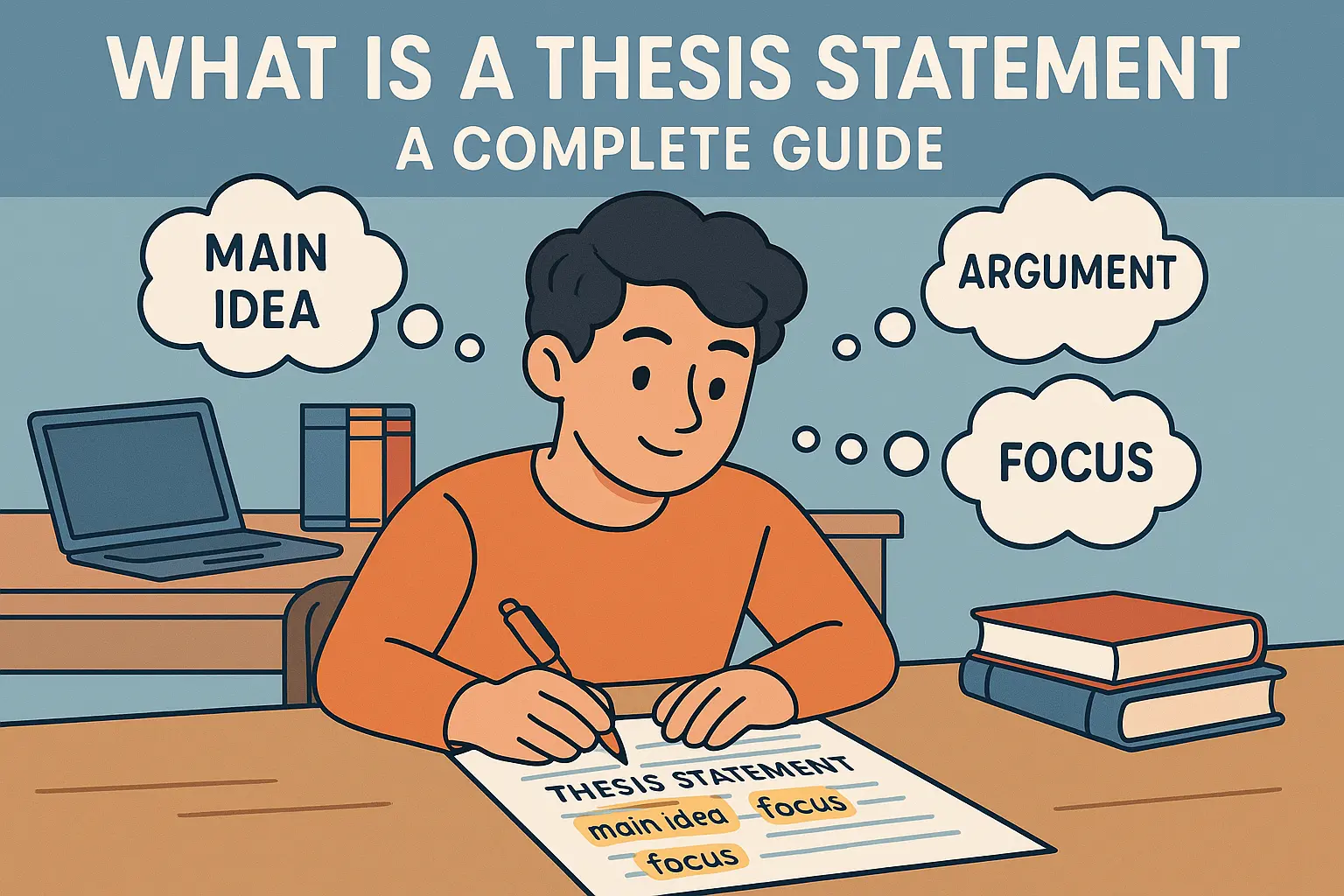
What a Thesis Statement

A Complete Guide on What a Thesis Statement Is and Why It’s Important

When you begin writing an essay, research paper, or dissertation, one of the most essential elements you need to master is the thesis statement. For many students, this single sentence feels intimidating, but once you understand its purpose and structure, it becomes a guiding tool that makes your writing more focused and effective.

In this comprehensive guide, we will explain what a thesis statement is, why it plays such a vital role in academic writing, and how you can create one with confidence. We will also provide tips, examples, and answers to common questions. Whether you are drafting a short essay or asking yourself, “Who can write my research paper?”, knowing how to develop a strong thesis will help you achieve academic success.

Introduction to Thesis Statements

Every piece of academic writing has a central idea that guides the reader. Without this guiding idea, essays often become vague and confusing. That is where the thesis statement comes in. It provides clarity, purpose, and direction for both the writer and the reader.

Think of it like a road map. When traveling to a new city, you wouldn’t start your journey without knowing where you want to go. Similarly, you should not start writing an essay without knowing your central claim.

What Is a Thesis Statement?

At its core, a thesis statement is a clear, concise sentence (sometimes two) that tells your reader the main argument or point of your essay or paper. It answers the question: What is the central message I want to communicate?

In simpler words:

  • It states the topic of your paper.
  • It provides your stance or opinion on that topic.
  • It outlines the direction your writing will take.

For example:

  • Weak: Pollution is a problem in the world today.
  • Strong: Pollution caused by industrial waste is one of the leading environmental challenges, and stricter government policies are necessary to protect public health.

The second example is practical because it not only identifies the issue but also presents a clear opinion, setting the stage for the paper.

Why a Thesis Statement Is Important

Students often ask, “Why spend so much time on one sentence?” The answer is simple: because everything in your essay connects back to it.

Provides Focus

It prevents you from wandering off-topic and keeps your writing sharp and relevant.

Guides the Reader

Readers know exactly what to expect. A good thesis tells them, “Here is my argument, and here is how I will support it.”

Improves Organization

It serves as the foundation of your essay. When each paragraph links back to the thesis, your writing becomes logical and well-structured.

Strengthens Your Argument

A well-crafted thesis makes your essay persuasive and academically strong.

Characteristics of a Strong Thesis Statement

Not every thesis is compelling. The strongest ones usually share the following qualities:

  • Clear: Avoid vague language.
  • Specific: Narrow the Focus instead of being too general.
  • Debatable: Should present an argument, not just a fact.
  • Concise: Usually one to two sentences long.
  • Focused: Directly addresses the essay question or topic.

Types of Thesis Statements

There are different kinds of thesis statements depending on the type of paper you are writing.

Analytical Thesis

Explains and breaks down an idea or issue.

Example: An analysis of Shakespeare’s Hamlet reveals how betrayal, revenge, and indecision drive the tragedy.

Expository Thesis

Explains or informs the reader.

Example: The invention of the Internet revolutionized communication, education, and business worldwide.

Argumentative Thesis

Takes a clear position and persuades the reader.

Example: School uniforms should be mandatory in high schools to reduce bullying and promote equality.

Steps to Write an Effective Thesis Statement

Creating a thesis is a process. Here’s how you can do it step by step:

  1. Understand the Assignment – Read the prompt carefully.
  2. Choose a Narrow Topic – Avoid being too broad.
  3. Do Preliminary Research – Gather facts to support your stance.
  4. Formulate a Question – What main question does your essay answer?
  5. Take a Position – Clearly define your stance.
  6. Draft Your Statement – Write one or two sentences summarizing your claim.
  7. Revise for Clarity and Strength – Make sure it’s precise and arguable.

Common Mistakes Students Make

When students struggle with thesis statements, they often fall into these traps:

  • Making it too broad (e.g., Education is essential).
  • Writing it as a question instead of a statement.
  • Being too vague (e.g., Technology has changed the world).
  • Including unrelated ideas.
  • Making it too long or complicated.

Examples of Good and Weak Thesis Statements

To understand better, compare these examples:

  • Weak: Exercise is good for you.
  • Strong: Regular exercise improves mental health, boosts productivity, and reduces the risk of chronic diseases.
  • Weak: Social media affects people.
  • Strong: Excessive use of social media leads to anxiety among teenagers by reducing face-to-face interaction and promoting unrealistic standards.

Role of the Thesis Statement in a Research Paper

When writing a research paper, the thesis statement is even more critical. Research papers are long and detailed, and without a clear thesis, they can lose Focus.

For example, if your topic is climate change, your thesis could be:

Climate change, driven by fossil fuel emissions, necessitates immediate international cooperation, the adoption of renewable energy sources, and stricter environmental regulations to prevent irreversible damage.

This statement not only sets a direction but also informs the reader of the supporting evidence to expect.

Thesis Statement vs. Topic Sentence

Many students confuse these two, but they are not the same:

  • Thesis Statement: The main argument of the entire essay. Usually at the end of the introduction.
  • Topic Sentence: The main idea of a single paragraph. Each topic sentence connects back to the thesis.

Please think of the thesis as the overarching umbrella, and topic sentences as the smaller parts that fall under it.

Tips for Beginners Who Struggle with Thesis Writing

If you are new to academic writing, here are some practical tips:

  • Start with a draft thesis, then refine it.
  • Ask yourself: Can someone disagree with my statement? If yes, it’s a thesis.
  • Please keep it simple. Avoid jargon or overly complex words.
  • Get feedback from a teacher, peer, or tutor.
  • Use examples from textbooks or online resources to guide you.

How Academic Services Can Help (When You Think “Can Someone Write My Research Paper?”)

Sometimes, even after trying your best, crafting a strong thesis can feel overwhelming. This is where academic writing services can provide guidance. Many students type “Can someone write my research paper?” into search engines when deadlines are near.

While you should learn how to write on your own, professional services can:

  • Provide model thesis statements.
  • Help structure your entire research paper.
  • Offer editing and proofreading support.
  • Save time and reduce stress.

Using these services wisely can be a learning tool rather than just a shortcut.

Frequently Asked Questions

Q1: Can a thesis statement be more than one sentence?

Yes, especially in longer papers. However, it is usually one clear, strong sentence.

Q2: Where should I place my thesis statement?

At the end of the introduction. This placement makes it easy for readers to see your main argument right before you start supporting it.

Q3: Do all essays need a thesis statement?

Most academic essays and research papers require a works cited page. However, some creative writing or reflective documents may not.

Q4: Can I change my thesis later?

Yes! Many writers refine or adjust their thesis as their research develops.

Conclusion

Understanding what a thesis statement is and why it matters is the foundation of academic writing. It acts as the backbone of your essay, guiding your arguments and helping your reader follow along with clarity. A strong thesis is clear, specific, and debatable, making your writing purposeful and persuasive.

If you are ever stuck or wondering, Can someone write my research paper?”, remember that learning to craft a strong thesis is a skill you can master with practice. The more you write, revise, and refine, the more confident you will become.

A thesis statement may be just one sentence, but it has the power to shape the entire success of your essay. Master it, and you have mastered one of the most essential tools in academic writing.

research topics

100 Research Paper Topics in Education & Technology

In today’s fast-paced digital world, everything is changing in the blink of an eye. Whether you talk about politics, religion, the education system, media, or technology, we are updating every day, and it is fruitful in many ways. The academic landscape is also changing, and choosing the research paper topic in education and technology is not an easy task. It requires focus and extensive research for impactful writing. We have curated a list of 120 research paper topics to help you find a relevant and thought-provoking idea. Categories like AI technology, digital learning, or educational innovations are some of the handpicked ideas perfect for students, educators, and researchers. Let’s get started to find out your next best paper research topic!


Technology & Education Research Paper Topics

These paper research topics on technology and education help you find new perspectives and insights into how technology transforms learning. You can enhance your critical thinking ability, which eventually helps you in finding argumentative research paper topics.

Education Research Paper Topics

  1. Challenges of online learning in small towns
  2. Importance of learning management systems in today’s modern education system
  3. Role of gamification in modern education system
  4. Online classes vs physical classes: which is more effective?
  5. Impact of online learning in today’s world
  6. Importance of cyber security in online education platforms
  7. Mobile learning apps vs online learning platforms
  8. Is online learning effective for home schooling?
  9. Is online learning healthy for students?
  10. Role of online tutors in academic challenges
  11. Should schools give limited homework to students to keep their good mental health?
  12. Should teachers build a friendly relationship with students in order to help them perform better in assessments?
  13. Should students be allowed to use smartphones in educational settings?
  14. Is co education beneficial for students or harming the educational system?
  15. Does online education provide better education than traditional education in schools?
  16. What is helpful for students in the modern era: listening to audiobooks or reading books?
  17. Digital technology and its effect on educational system
  18. Is the Cambridge education system good or the American education system?
  19. Cause of online education system becoming popular
  20. Does COVID-19 affect the traditional education system?
  21. Do uniforms teach discipline to students?
  22. Does getting a degree make you rich or wise?
  23. Do tablets replace books in schools?
  24. Is digital technology in schools providing better learning opportunities to students?
  25. Benefits of working in a group project for a student
  26. Does storytelling provide better concept clarity to students than traditional methods of teaching?
  27. What kind of punishment methods are useful to teach students about their mistakes?
  28. Healthy effects of extra curricular activities in children
  29. Does increasing college fees reduce the interest to get education and a degree?
  30. Do teacher training programs increase the effectiveness of elementary school?
  31. Should online education affect the social skills of students?
  32. Should schools include mental health programs for the student’s academic performance?
  33. Should junk food be restricted for students in school in order to learn effectively?
  34. Junk Food vs Healthy food: which one affects student’s performance and mental health?
  35. The importance and role parental involvement in child’s education
  36. The role of teacher’s mental health in classroom teaching
  37. The role of STEM education in student’s lives for achieving better jobs and lifestyle
  38. Does play-based learning develop better cognitive skills in early childhood education?
  39. Role of bilingual education in primary school
  40. Should special schools need more attention than traditional schools?
  41. Role of introducing arts and music in early childhood education
  42. Role of Montessori schools in children’s personality development
  43. Should homework policy become more stressful in a student’s education?
  44. Impact of class environment in student’s academic performance
  45. Does physical education play an important role in a student’s achievement?
  46. Homeschooling: pros and cons
  47. Is homeschooling more effective than traditional schooling?
  48. The rise of textbook-free classrooms in educational institutions
  49. Does standardized testing impact student’s learning
  50. Should disabled students get inclusion in traditional schools?


Technology Research Paper Topics

  1. Does technological advancement impact student’s performance in educational institutions?
  2.  Is digital reading more beneficial than traditional reading for students?
  3. The impact of social media in student’s academic performance
  4. Is technological advancement improving student’s academic performance
  5. Role of technology in developing society culture
  6. Importance of social media in student’s mental health
  7. Does technological advancement increase societal pressure?
  8. Does AI replace the jobs of humans?
  9. Should schools develop educational apps for students for learning purposes
  10. Are gamified learning apps helpful for math students?
  11. Is gamification a better way to improve academic performance?
  12. Should parents track their children’s digital activity for safety purposes?
  13. Are digital flashcards becoming old in the modern technology era?
  14. Should homework be given to students through online apps?
  15. Technological advancement and healthcare systems
  16. Do healthcare systems use advanced technology to increase productivity and effectiveness of hospitals?
  17. Role of technology in classroom management
  18. The effects of social media platforms on school students
  19. Use of online learning platforms in student learning outcome in educational system
  20. The role of online tutors in student’s academic performance
  21. Pros and cons of using online learning apps
  22. Pros and cons of using technology in online exams
  23. Do collaborative learning be useful in the tertiary education system?
  24. Is online learning effective in tertiary education?
  25. Are digital tools for every problem making you stress-free?
  26. Is online learning more effective for special students?
  27. Is the Smart home system a useful technology for households?
  28. Is the Internet of things actually changing living standards globally?
  29. Role of artificial intelligence in healthcare system
  30. Is mobile phone technology the greatest innovation in history?
  31. Role of virtual reality in mental health therapy sessions
  32. Role of robotics in manufacturing industries
  33. Pros and cons of keeping robots in hospitality management
  34. Is technology helping to predict the disaster and how to manage it?
  35. Impact of green technology in sustainable developement
  36. Do fitness trackers actually help people to keep themselves fit?
  37. Impact of fitness bands in health management
  38. Importance of technological advancement in cybersecurity to save confidential data of government institutions
  39. Role of technological innovation in increasing renewable energy
  40. Role of AI for optimizing smart grid technology
  41. Use of AI-powered biometric authentication system in the banking sector
  42. Use of AI technology to predict extreme weather conditions and events to prevent casualties
  43. Use of advanced technology to collect weather data and monitor the effects
  44. Use of technological advancement in the rise of autonomous vehicles for stress-free travel
  45. Pros and cons of using augmented reality in retail sector
  46. Effect of AI generated content in misleading and delivering misinformation
  47. Negative effects of deepfake technology on society
  48. Importance of project management softwares in remote work setting
  49. Role of digital technology in remote work culture
  50. Impact of gaming on teenager’s mental health


FINAL WORDS

Finding the right topic means half the battle is won. It will help you to focus and set the direction for your remaining research journey. Now, you can put your energy into writing about the topic, which will become easy when you hire research paper writing service at Affordable Writing. With these 100 research paper topics, we are helping you choose the right topic to get halfway through your academic journey. If you want paper research topics for your thesis or you are seeking argumentative research paper topics for an upcoming debate, this list of topics motivates you to write with confidence, relevance, and depth. Our aim is to bring results-driven solutions to your academic concerns and make academic research easy, accessible, innovative, and impactful.

Research Paper writing

Research Paper : Writing a Conclusion

The conclusion is the last, yet not the simplest piece of a research paper. It must abridge the entire paper and clarify its principle reason. This segment additionally shouldn’t sound excessively dry. Any conclusion comprises of a couple of components, so you can pick various methodologies relying upon your motivation and the paper type.

Research Paper Writing

Definition of Conclusion in Research Paper:

In easy words conclusion is the last paragraph of the research paper which outlines the whole paper. There has been a lot of discussion on its importance but without a doubt a good conclusion may entice the reader to research more, however a bad conclusion may do the opposite.

The Reason we use Conclusion:

The reason of conclusion in a research paper is to outline and summarize the entire work. You need to be clear about all the sections including but not limited to introduction, body and conclusion which will help you succeed. Due to its scientific nature it is much harder than an essay investigating thoroughly.

Examine the eventual fate of the subject:

You need to address the future viewpoint of your research and the thought about issue. It might be a recommendation or an invitation to take action. Note that this piece of the presentation isn’t fundamental. For instance, you don’t have to write it when writing an abstract research, since you improbable will locate any conceivable suggestion to take action for this situation. Then again, if your paper tends to some significant social issues, the conclusion will just profit by your musings about the conceivable utilization of your research and significant needs here.

Make recommendations and restate your topic and thesis statement:

On the off chance that you make an invitation to take action, you need to clarify what activities you consider the most significant or compelling. You can give certain recommendations on your topic even in the event that you don’t make a suggestion to take action, in light of the fact that your musings of such a sort may better comprehend the topic and the general setting of your research. Repeat your topic quickly and clarify why it’s significant. When you’ve repeated the topic of the research, you need to rehash your thesis statement.

The content of a conclusion presumes an outline of your thoughts and demonstrating your topic with solid and reasonable contentions. A subordinate is based on an examination of the crucial thesis and sections. When checking your research paper, a scholarly centers his entire thoughtfulness regarding an illation on the grounds that there he sees top notch thoughts and evaluations the understudy’s tirelessness. All things considered, writing the conclusion requests the writer’s undertakings and comprehension of its structure and centrality.

Now affordablewriting.net also offers Online Class Help and Online Home Work Help because our clients need it.

Also find our informative blogs on Blogspot.com

dos-&-donts-to-write-research-paper

The Do’s and Don’ts of Writing a Research Paper

It is the ultimate dream of any student to write an excellent, on-point, and authentic research paper, and earn all the rewards and praise that comes with it. While they do put in their best efforts in making sure their research paper is a success, it is very likely to lose track of a few things that may later hurdle their dream from turning into reality.

In this blog, we’re sharing some do’s and don’ts of writing a research paper for you to keep in check. Read on.

Do's and Don't For Research Paper Writing


The Do’s

do's for research paper writing

Adopt a concise, straightforward approach

A research paper is far from a piece of fiction or creative writing. It is an academic assignment in which you have to present research-based facts, arguments and counterarguments. And for that, you don’t need to weave stories around the topic. Stick to facts and incorporate a professional, concise and straightforward approach throughout.

Base your research on logic and evidence

Discuss the idea, approach and methodologies involved in research and provide reasons to justify each as to why you think it goes in sync with the demands of your paper.

Focus on research

Research forms the foundation of any academic assignments. Dedicate ample time for research, consult credible resources and make sure the information you gather is authentic, reliable, and up-to-date.

Use appropriate jargons and terminologies

Depending on the topic of the paper and the domain of research, use the right scientific terms and jargons and avoid using a flowery vocabulary.

Watch out for the style guide

Get to know the specifications and requirements of the style guide advised by your supervisor and remember to incorporate it throughout the paper.


The Don’ts

don'ts for research paper Writing

Don’t cram information

Not all information you come across during research will add any value to your paper. Be picky with what you include in your research paper.

Don’t include irrelevant, absurd or baseless arguments

Be logical and straightforward while stating your reasons that drove the research. You don’t need to show your wits in the paper or provide irrational reasons that make no sense.

Don’t extend unnecessarily

No matter how broad is the domain of your research, you need to define the scope of your paper and frame your work around it. Don’t exceed the word limit set by your supervisor.

Don’t make personal claims

Many students tend to forget this while working on their research paper. Remember, you can’t include anything in the paper that doesn’t have scientific and research-based evidence backing it. Refrain from making personal claims. This will only weaken the credibility of your paper and make it look amateur.

Don’t use unreliable sources

Consult as many sources as you can but remember that not all information you’re going to find is authentic. This is especially true in case of the material you find online, especially on Wikipedia. Use reliable resources such as online journals, scholarly platforms, and research repositories.


Writing a research paper is a long and time-taking process and requires a lot of care and attention on one’s part. Just make sure you keep these do’s and don’ts in check, and you should be good to go.

Now affordablewriting.net also offers Online Class Help and Online Home Work Help because our clients need it.

Also find our informative blogs on Blogspot.com

Research Paper

Tips on Finding the Right Resources for Writing Research Paper

Research is the cornerstone for writing a research paper, or for any academic assignment or essay. However, with convenient access to information available on the internet, books, journals, libraries, and scholarly articles, it is highly likely for students to get distracted from the core subject of their assignment and lose their track.

It is important to understand that not all resources are right for you and cramming information into the assignment won’t essentially add any value to it. Therefore, a wise approach is to plan your research and be as selective as you can while picking up information for writing research paper.

Here are some useful tips on finding the right resources for your research assignment. Read on.

Selecting the Right Information Resources

Library

Research Paper Writing Help-Library

Your college or university library holds a treasure trove of information for your research paper . You should consult with the supervisor as well as the librarian and ask them to guide you on the sections where you can get the best material on the topic of your assignment. However, keep it in mind that the library staff and teaching assistants will sure help you with your queries, but they won’t serve you the sources and material on your table. You will have to do the research on your own.

Journals

Academic journals are a great way to find credible information on your topic and also add depth to your work. There are some reputed and most commonly used online journals and repositories such as JSTOR, Google Scholar, NBER, and EBSCO. Ask the supervisor if your institution has a subscription to any journal which you can access to look for information for the research paper.

Internet

The world wide web has made finding information just a matter of a few clicks. Whatever the subject or topic of your research, you can find millions of pieces of information, anywhere and at any time. However, while consulting the internet for assignment research, you need to be selective and cautious, since a majority of information in the digital sphere comes from inauthentic sources and picking them blindly may damage the credibility of your work.

Reference Books for your research Paper Writing

Reference books can be a great source of information on any topic. And although it might come a bit cumbersome to peruse through catalogues or outlines of a pile of books, rest assured that the information you find here will be authentic and citing it in your paper will add a lot of credibility and professionalism to your work.

Assignment Consultants

Assignment Writing Consultant

There are numerous reputed online services offer assistance and consultancy to students in their assignments. They have a team of subject specialists and research assistants on their panel who can assist you through the process of gathering valuable information for your paper. Not just that, they will also guide you on the scope of the topic and how to go about building your argument in the paper.


The quality of work you produce in your paper depends a great deal on your research paper writing. We hope you find these tips useful and get the best resources for your assignment.

Now affordablewriting.net also offers Online Class Help and Online Home Work Help because our clients need it.

Also find our informative blogs on Blogspot.com